
Fats Demystified: The Truth About Dietary Lipids
Published: March 2026
Understanding Fats: Breaking the Fear Narrative
Dietary fats have been the subject of significant misinformation and fear-mongering over recent decades. Many people have been led to believe that all fats are unhealthy and should be avoided. The scientific evidence, however, tells a more nuanced story: fats are not only safe but absolutely essential for human health. In fact, many critical bodily functions simply cannot occur without adequate dietary fat.
The Energy Density Advantage
Fat provides 9 kilocalories per gram, compared to 4 kilocalories per gram for both protein and carbohydrates. This higher energy density means fats are more concentrated sources of energy. Your body can store energy efficiently as fat, which served important evolutionary functions in helping humans survive periods of food scarcity. While obesity and excess caloric intake are legitimate health concerns in modern contexts, this doesn't mean dietary fat itself is unhealthy—it means overall caloric balance matters.
Many people mistakenly assume that eating dietary fat leads directly to body fat accumulation. The reality is more complex: weight gain occurs when total caloric intake exceeds expenditure, regardless of whether those calories come from fat, carbohydrates, or protein.
Types of Dietary Fats
Saturated Fats
Saturated fats are molecules where each carbon in the fat chain is "saturated" with hydrogen atoms, creating a straight molecular structure. Sources include animal products (meat, dairy, eggs), coconut oil, and palm oil. They are solid at room temperature. For decades, saturated fats were demonized as harmful to heart health. The scientific picture is now more nuanced. While some evidence suggests excess saturated fat intake may increase LDL cholesterol in some individuals, the relationship between saturated fat and heart disease is not as clear-cut as once believed. Moderate consumption of saturated fats from whole food sources appears to be safe for most people.
Unsaturated Fats
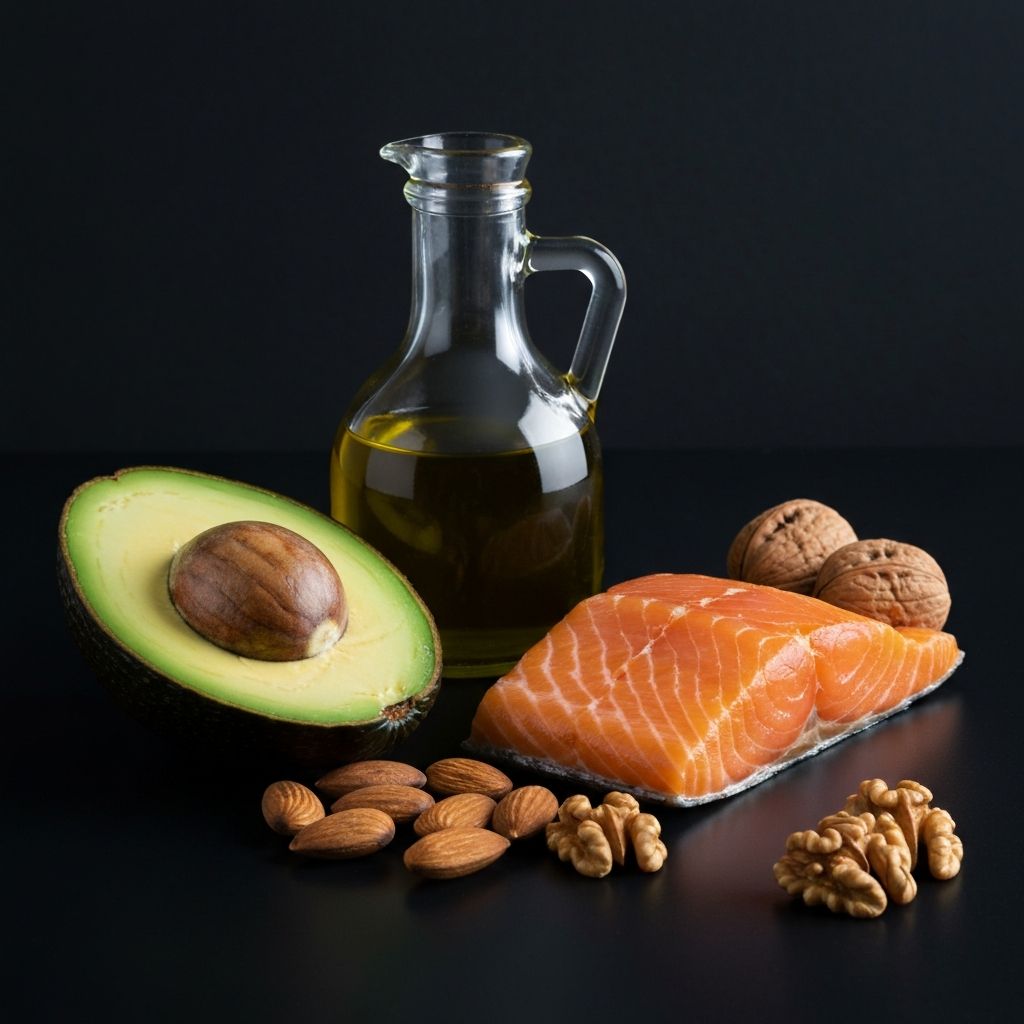
Unsaturated fats have one or more "kinks" in their molecular structure due to missing hydrogen atoms. They are typically liquid at room temperature and can be found in olive oil, avocados, nuts, seeds, and fatty fish. Unsaturated fats are generally considered beneficial and are consistently associated with positive health outcomes in research.
- Monounsaturated fats: One kink in the molecule. Found in olive oil, avocados, and some nuts. Associated with cardiovascular benefits.
- Polyunsaturated fats: Multiple kinks. Include the essential fatty acids omega-3 and omega-6. Found in fatty fish, walnuts, flaxseeds, and vegetable oils.
Essential Fatty Acids
Two polyunsaturated fats are "essential"—meaning your body cannot manufacture them and they must come from food sources:
- Omega-3 Fatty Acids (Alpha-linolenic acid): Found in fatty fish (salmon, mackerel), walnuts, flaxseeds, and chia seeds. Important for brain health, reducing inflammation, and cardiovascular function.
- Omega-6 Fatty Acids (Linoleic acid): Found in vegetable oils, nuts, and seeds. Important for cell function and skin health.
The ratio of omega-3 to omega-6 in your diet can influence inflammation levels in your body. Western diets often contain excessive omega-6 relative to omega-3, which may promote inflammation. Increasing omega-3 intake through fatty fish or plant sources can help balance this ratio.
Trans Fats: The Exception
Trans fats are artificial fats created through industrial hydrogenation processes. They have no beneficial role in nutrition and are associated with increased health risks including elevated inflammation and adverse blood lipid profiles. Trans fats should be minimized or eliminated from the diet. Fortunately, many countries have restricted or banned trans fats in commercial food production.
Why Fats Are Essential
Hormone Production
Cholesterol, derived from dietary fat, is the precursor for steroid hormones including testosterone, estrogen, progesterone, and cortisol. Without adequate fat intake, your endocrine system cannot produce these essential hormones. This affects sexual function, mood regulation, energy levels, and stress response. Women who severely restrict fat intake often experience hormonal disruption including menstrual irregularities.
Nutrient Absorption
Fat-soluble vitamins A, D, E, and K require dietary fat for absorption from the digestive tract. You could consume adequate amounts of these vitamins, but without sufficient fat in your diet, your body cannot absorb them effectively. This means vitamin deficiencies can occur despite adequate intake when fat intake is too low. This is particularly important for vitamin D absorption and bone health, and for vitamin A's role in vision and immune function.
Brain and Nervous System Function
Your brain is approximately 60% fat by weight. The fatty acid composition of your brain directly reflects the fat you consume. DHA (docosahexaenoic acid), an omega-3 fat, is particularly important for brain development, cognitive function, and mental health. Adequate fat intake supports neurotransmitter function, mood regulation, and memory formation. This is why dietary fat is especially important during pregnancy, infancy, and childhood when brain development is rapid and critical.
Cell Membrane Structure
Every cell in your body is surrounded by a membrane composed largely of fat (phospholipids). The fluidity and integrity of these membranes depends on fat composition. Without adequate fat intake, cell membranes become rigid and less functional, impairing cellular processes throughout your body.
Immune Function
Omega-3 fatty acids suppress excessive inflammation and support immune regulation. Adequate fat intake supports the production of immune cells and antibodies necessary for fighting infections. Conversely, very low-fat diets can impair immune function, making individuals more susceptible to illness.
Satiety and Metabolic Health
Fat is a satiating macronutrient—foods containing fat keep you feeling full longer than low-fat alternatives. This can support healthy eating patterns and weight management. Additionally, fat slows gastric emptying, leading to more stable blood sugar levels and less dramatic insulin responses. Meals that combine fat, protein, and carbohydrates tend to produce more stable energy levels throughout the day compared to high-carbohydrate, low-fat meals.
Food Sources of Healthy Fats
| Fat Source | Primary Fat Type | Additional Benefits |
|---|---|---|
| Fatty Fish (Salmon, Mackerel, Sardines) | Omega-3 Polyunsaturated | High in vitamin D, selenium, and B vitamins |
| Olive Oil | Monounsaturated | Rich in polyphenols and antioxidants |
| Avocado | Monounsaturated | Contains potassium, fiber, and micronutrients |
| Nuts and Seeds | Mixed (Monounsaturated and Polyunsaturated) | Protein, fiber, vitamins, minerals, and antioxidants |
| Eggs (especially yolks) | Mixed | Choline, lutein, zeaxanthin, and complete protein |
| Coconut Oil | Saturated | May have anti-inflammatory properties, though more research needed |
| Full-Fat Dairy | Saturated | Calcium, vitamin D, vitamin K2, and beneficial microbes (in fermented dairy) |
Key Takeaways
- Dietary fat is essential for health. It supports hormone production, nutrient absorption, brain function, cell structure, and immune health.
- Different types of fats have different effects. Unsaturated fats and essential omega-3 fatty acids are particularly beneficial. Trans fats should be avoided.
- The "fat makes you fat" narrative is oversimplified. Weight management depends on total caloric intake, not specifically on fat consumption.
- Low-fat diets can actually impair health by reducing essential nutrient absorption and interfering with hormone production.
- A healthy diet includes moderate amounts of fat from diverse sources: fatty fish, nuts, seeds, avocados, and olive oil.
- Individual fat needs vary based on activity level, goals, and health status. There is no universal optimal percentage of calories from fat.
- This information is educational and not a substitute for personalized dietary guidance.